
Buying property in Spain involves several key steps, and among them, the tasación plays a crucial role. Too often underestimated by foreign buyers, this official valuation nevertheless determines access to bank financing, the loan amount granted, and even the interest rate terms.
Whether you are buying a primary residence, a second home, or making a rental investment, understanding how the tasación works in Spain will allow you to anticipate potential obstacles, negotiate more effectively with banks, and optimize your financing plan.
In this article, we will examine chronologically what the tasación is, how it works, when it is carried out, why it is so important, and how much it costs.
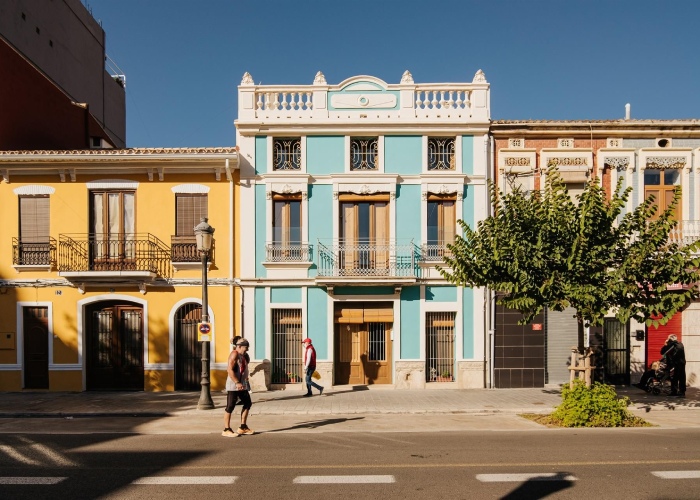
Buying a property in Spain involves several key steps, and the tasación is one of them, as it plays a crucial role in securing financing and negotiating with the banks. How does the tasación work in Spain, and why is it so important?
What is the tasación in Spain?
The tasación is an official and regulated valuation of a property, carried out by a certified expert. It is required by Spanish banks when applying for a mortgage.
Unlike a simple real estate agency estimate, the tasación is based on criteria strictly regulated by Spanish banking legislation.
What does the tasación consist of?
The tasación is a complete analysis of the property carried out by an independent expert.
This analysis considers several elements, including:
The location of the property
The surface area and layout
The general condition of the property
Comparable market prices in the area
The legal and cadastral situation
Once the study is completed, a tasación report is issued, indicating the official estimated value of the property.
When does it take place during the mortgage process?
The tasación takes place after signing the reservation contract or the purchase agreement, and before the bank gives its final mortgage approval.
It is a crucial step:
No bank will approve a mortgage without a valid tasación.
As long as the bank does not know the official valuation, it cannot determine:
The loan amount
The loan-to-value percentage
The final mortgage conditions
Does it matter if it is close to the sale price?
Yes, it is essential.
The closer the tasación is to the sale price, the smoother the process will be.
If the valuation is much lower, the buyer must provide a larger down payment.
A consistent tasación helps:
Avoid unpleasant surprises
Secure the purchase
Maintain good financing conditions
What does the bank say? The basic rule
Banks always apply the same rule:
The bank will always use the lowest value between the sale price and the tasación.
Example:
Sale price: €300,000
Tasación: €280,000
The mortgage will be calculated based on €280,000 never €300,000.
Good to know: when the tasación is higher than the sale price
If the tasación is higher than the sale price, it can be advantageous.
In this case:
The bank will still use the sale price,
But it may improve mortgage conditions: better interest rates, greater flexibility, or even higher financing for other projects.
It shows the bank that you are buying below market value a positive sign.
If the valuation is lower than the sale price, can you request another one?
Yes, you can!
There are private tasación companies officially recognized by Spanish banks.
They are usually more expensive, but they can provide a higher valuation when the initial one was underestimated.
This option is often used to:
Improve mortgage conditions
Reduce the required down payment
Secure the financing
However, the new valuation must remain realistic and consistent with the market.
How much does a tasación cost in Spain?
The cost depends on:
The bank
The type of property
The estimated value
Generally, it ranges between €300 and €600.
Depending on the bank, it may be:
Covered (rarely)
Paid upfront by the buyer
Included in administrative fees
It is, in any case, an essential investment when buying property in Spain.
Conclusion
The tasación is far more than a formality it is a cornerstone of real-estate financing in Spain.
It directly influences the loan amount, the bank’s conditions, and the feasibility of your project.
Understanding this step, anticipating its impact, and knowing your options in case of disagreement with the valuation can make the difference between a successful purchase and a blocked loan.
👉 Need help to your guided property search in Valencia? Our multilingual team guides you at every step, even remotely.