
Inheriting a house, apartment, or piece of land in Spain while living abroad is becoming increasingly common, particularly for foreign nationals with relatives settled there.
However, unlike a domestic inheritance, an international succession involves specific legal procedures, administrative differences, and a tax system that varies by Spanish region. For many heirs, the first questions are: Who should I contact? What documents are required? What are the deadlines? Do I need to travel to Spain?
The good news is that there are well-established procedures for managing a Spanish inheritance remotely, whether to accept the inheritance, pay the taxes, regularize ownership, or later sell the property.
As a French-speaking professional based in Valencia, I regularly assist heirs living in France, Belgium, Switzerland, or Canada who need to complete these steps without being physically present in Spain.
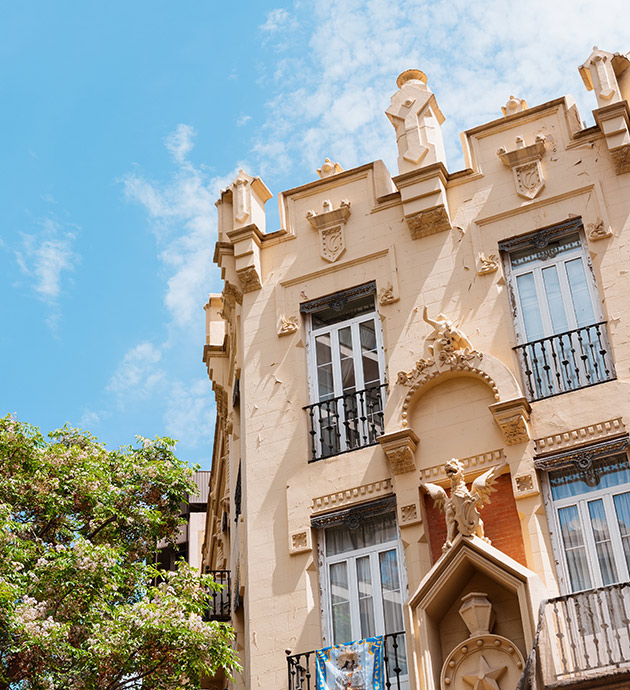
Receiving an inheritance in Spain from abroad may seem complex, but with the right steps, everything becomes much simpler.
1. Understanding inheritance rules in Spain
Spain applies specific legislation regarding inheritance.
One essential point to understand is that the inheritance tax depends on the region where the property is located, as tax rules and allowances vary significantly between Valencia, Madrid, Catalonia, Andalusia, the Balearic Islands, and others.
Spanish law does not automatically apply to your inheritance. Since the 2015 European regulation, the law of the deceased’s country of residence governs the succession, unless the deceased expressly chose the law of their nationality.
Nevertheless, heirs must still complete administrative procedures in Spain, as the property is located there. Involving a Spanish notary is therefore mandatory.
2. Essential steps to accept an inheritance in Spain
When inheriting property in Spain, the first step is to gather documents relating to the deceased and the heirs: death certificate, birth certificates, family record book, any existing will, or a certificate of absence of a will.
A Spanish notary must then issue the acta de declaración de herederos (declaration of heirs) if no Spanish will exists, or proceed with reading and validating the will.
Once the heirs are identified, the inheritance must be formally accepted. This acceptance can be carried out remotely through a notarized power of attorney, avoiding the need to travel to Spain.
The process also includes settling inheritance taxes and updating land registry records (Registro de la Propiedad).
These steps are essential before you can freely dispose of the inherited property.
3. Inheritance tax in Spain: what you need to know
Inheritance taxation in Spain varies depending on the region where the property is located. Some autonomous communities offer very favorable reductions (such as Madrid), while others apply higher taxation.
Generally, heirs have 6 months to pay inheritance tax (Impuesto de Sucesiones), with possible extensions in certain cases.
The tax calculation depends on:
The value of the inherited property,
The family relationship with the deceased,
Regional allowances,
The tax residence of the deceased.
You may be a tax resident in France and still have to pay inheritance tax in Spain. In some cases, the inheritance must also be declared in France, but tax treaties prevent double taxation.
Proper preparation helps avoid late-payment penalties and secures the transfer.
4. Managing a Spanish inheritance remotely through a power of attorney
One of the most practical solutions for heirs living abroad is to sign a notarized power of attorney (poder notarial) allowing a professional or trusted person to handle all procedures in Spain.
Through this power of attorney, the appointed representative can:
Sign the acceptance of the inheritance,
Pay the required taxes,
Update cadastral and land registry records,
Collect or submit official documents,
Manage relations with notaries, authorities, or banks,
And even sell the property if you wish.
This is the simplest way to avoid travel, reduce delays, and secure the process.
5. What to do once the inheritance is accepted? Keep, rent, or sell the property?
Once the succession is settled and the property is officially in your name, several options are available:
Keep the property
For personal use or to preserve it as part of the family heritage. This involves obligations such as property tax (IBI), maintenance, and charges.
Rent the property
In tourist or dynamic areas, renting can generate attractive additional income. However, local regulations must be respected (tourist licenses, taxation, etc.).
Sell the property
Many heirs living abroad choose this option to simplify their situation.
The sale can also be carried out by power of attorney, without traveling, allowing the inheritance to be finalized quickly.
The right choice depends on your goals, the local market, and advice from a professional familiar with your situation.
Conclusion
Inheriting property in Spain from abroad may seem complex, but the procedures are well structured and can be managed remotely. By understanding inheritance rules, preparing the necessary documents, and being supported by a competent professional, you can settle the inheritance efficiently and with peace of mind.
Whether you choose to keep, rent, or sell the property, proper guidance is essential to make the decisions best suited to your personal and financial situation.