
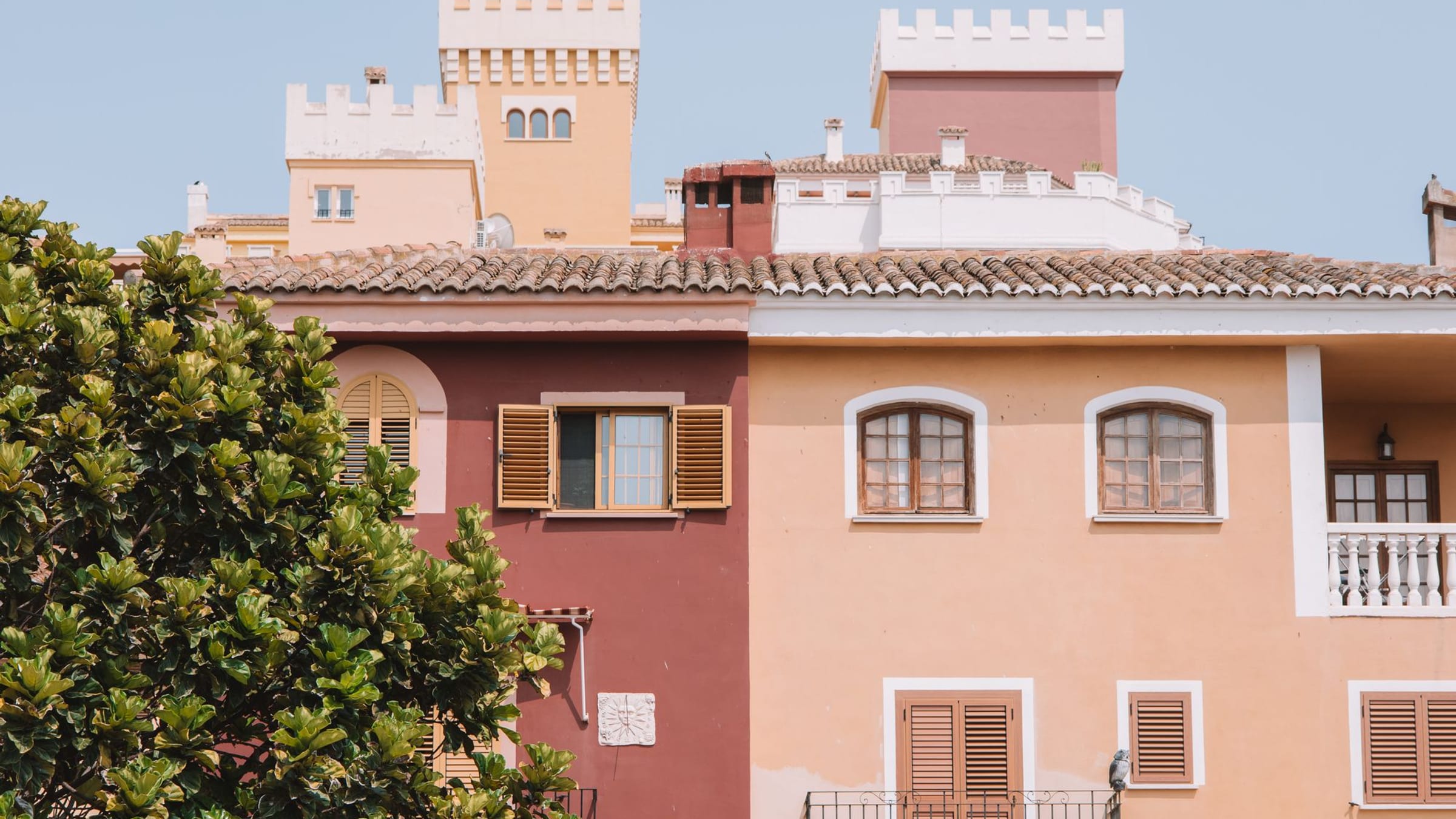
“Can you actually find a house in Valencia?” It is one of the first questions international buyers ask us. And the honest answer needs some nuance, because Valencia does not work like most Spanish coastal cities.
Here the detached house is not by the water, nor in the centre: it hides mostly inland, to the west of the city. This guide walks through the whole question, honestly: where to find a house in town, why seafront homes are so rare, what the famous Ley de Costas changes, and what budgets to plan for.
Houses right in the centre of Valencia? Fairly rare
Let us be clear: the centre of Valencia is a centre of flats. In Ciutat Vella, the Eixample, Ruzafa or Gran Via, you buy a home inside a building, an older one with its high ceilings and mouldings, or something more recent. The standalone house in the very heart of the city is the exception.
There are still some townhouses (often called casas or fincas urbanas) in a few neighbourhoods that keep a village feel: El Cabanyal with its old fishermen’s fabric, Benimaclet, Patraix, or the Poblats del Sud. These are prized properties that sell quickly and fetch top prices once renovated. To really get the spirit of these areas, see our guide to the best neighbourhoods to live in Valencia.
In short: if you are after a house with a garden and a bit of space, the hyper-centre is not where to look. The surroundings are.
Why so few seafront houses in Valencia?
This is THE quirk of Valencia, and it surprises a lot of buyers. The city sits back from the sea. Its waterfront (Las Arenas, La Patacona, the port) is essentially blocks of flats and promenades, not villas with their feet in the water.
Unlike Alicante, Barcelona or Malaga, where you find houses right on the beachfront, Valencia built its residential wealth inland, to the west, towards Madrid. So the most coveted areas for a house are not coastal at all: they are in the hinterland, on the rises and plains to the west.
To find a house that genuinely faces the sea, you have to leave the city: 20 to 40 km north (El Puig, Puçol, Sagunto) or south (El Saler, El Perello, Cullera). These houses do exist, but they are rare, in high demand and expensive. It is a niche property type.
The Ley de Costas: the law that can complicate a seafront purchase
There is one technical point too many buyers discover too late: the Ley de Costas (the coastal law). It protects the public maritime-terrestrial domain, meaning the shoreline strip that belongs to the State.
Some older houses were built very close to the shore, sometimes on that public domain. The result: instead of owning it outright, you hold a State concession, granted for a limited period. You can live there, but the legal status is not that of a standard property, and both resale and inheritance follow special rules.
The message is simple: faced with a lovely seafront house at an attractive price, always check its status (full ownership or concession, distance to the public domain) before you commit. This is exactly the kind of check we run for our clients, along with reading the nota simple.
Where to find houses around Valencia
The good news is that as soon as you move a little away from the city, the supply of houses widens noticeably. Two broad families take shape:
- The residential developments to the west, in the Camp de Turia (L’Eliana, La Canada, Betera, Rocafort and so on): detached houses with a garden and pool, close to international schools and well connected to the city. This is the premium family zone. We devote a dedicated guide to it: where to buy a house near Valencia.
- The affordable towns around Valencia, a bit further out or easier on the budget, which we cover in our article on the most affordable towns around Valencia.
And the further you go, the more you meet another world: that of rustic land, where houses are far cheaper but subject to specific rules (utility connections, financing, extensions). It is a subject in its own right, which we handle in our guide on rustic versus urban land.
What budget do you need for a house in Valencia?
There is no single answer, but a few reference points for 2026:
- A townhouse to renovate in a neighbourhood like El Cabanyal can start around a few hundred thousand euros, depending on condition and location.
- A detached house in the sought-after developments to the west (Camp de Turia) most often sits between 500,000 and 800,000 euros, sometimes more for large plots with a pool.
- On more isolated or rustic plots, 30 or 40 minutes from the city, you find markedly cheaper houses, which is explained precisely by their status and their constraints.
To place these figures within the wider market, read our analysis of the Valencia property market in 2026 and our benchmark on the average house price in Spain. On the financing side, bear in mind that the type of land (urban or rustic) strongly influences what banks are willing to fund: we explain it in our guide to financing a property purchase in Spain.
Townhouse, villa, chalet, finca: what are we talking about?
The local vocabulary can be confusing. Here are the main types of house you will come across around Valencia:
- Casa de pueblo / townhouse: a terraced house in the heart of a village or neighbourhood, often over several floors, sometimes with a patio.
- Chalet / villa: a detached house with land, typical of residential developments (in Spain the word chalet means a detached house, not a mountain chalet).
- Chalet adosado / pareado: a terraced or semi-detached house in an estate, more affordable than a standalone villa.
- Finca / masia: a rural property with land, often on rustic soil, full of authentic charm but with technical constraints.
To dig deeper into villas and their best areas, see our guide to buying a villa in Valencia.
Conclusion: a house in Valencia, yes, but in the right place
Finding a house in Valencia is possible, provided you think differently than you would in a classic seaside town. The centre remains the realm of the flat, seafront homes are rare and sometimes legally complex, and the real playground for houses lies inland, to the west of the city.
At BuenApart, a French-speaking agency in Valencia, we guide our clients to target the right area for their project and budget, verify the legal status of every property, and secure the purchase from start to finish, including remotely. Let’s talk about your house project in Valencia.
Frequently asked questions
Can you buy a house right in the centre of Valencia?
It is rare. The centre of Valencia is made up mostly of flats. You will find a handful of townhouses in neighbourhoods like El Cabanyal, Benimaclet or Patraix, but they sell fast and command high prices. For a genuine house with a garden, you need to look at the outskirts.
Are there seafront houses in Valencia?
Very few. Unlike Alicante, Barcelona or Malaga, the city of Valencia sits back from the sea and its waterfront is mostly apartment blocks. For a house facing the water you have to move 20 to 40 km north or south. It is a rare, sought-after property type.
What does the Ley de Costas change for a seafront house?
The coastal law protects the public maritime-terrestrial domain. Some older houses too close to the shore are held under a time-limited State concession rather than full ownership. Before buying, you must check the property’s exact legal status.
What budget do you need for a house around Valencia?
It depends on the area. In the sought-after developments to the west (Camp de Turia), a detached house often runs from 500,000 to 800,000 euros. Further out, on isolated or rustic plots, you find much cheaper houses, but with constraints worth knowing about.