
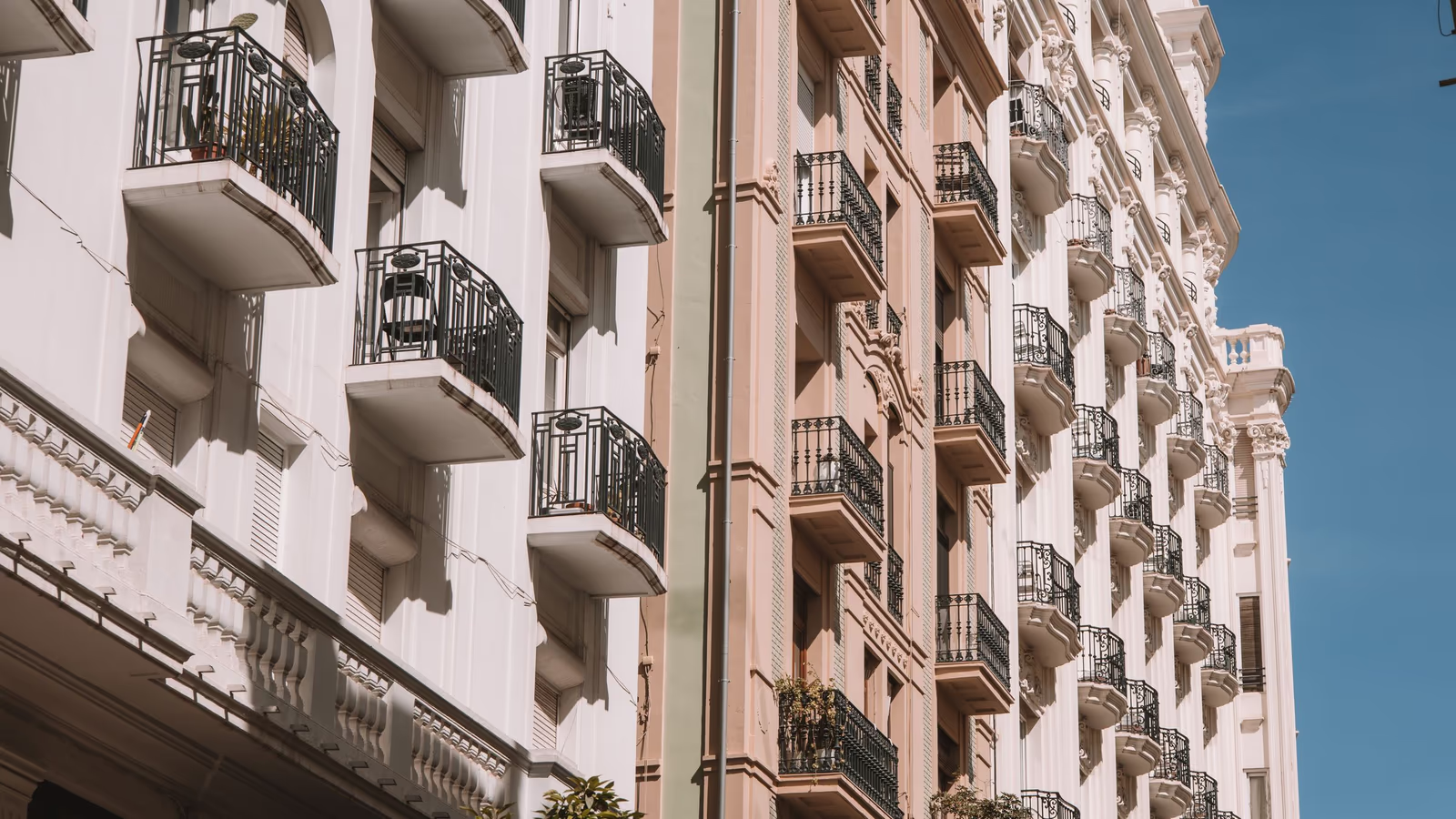
You have decided to sell your apartment or house in Valencia, or you are seriously thinking about it. The good news is that a sale in Spain always follows the same order: set the price, gather the documents, work out what you will keep, prepare the property, sign the deposit contract (arras) and finally sign the deed before a notary. This guide walks through each step, with the real costs and the mistakes that lose sellers the most money.
In short, to sell your flat or house in Valencia:
- Set a price based on actual sales in your neighbourhood, not on listings.
- Gather the title deed, the land registry extract, the IBI receipt, the energy certificate and the community certificate.
- Work out your net proceeds: municipal plusvalía, capital gains tax and fees.
- Decide whether to sell privately or through an agency.
- Prepare the property and a listing with good photos.
- Sign a clear arras contract: that is where you are really committed.
- Sign the deed before a notary, get paid and complete the tax filings.
1. First things first: what your apartment is really worth
The asking price drives everything else. An overpriced apartment sits on the portals for weeks, buyers watch it go by again and again, and it ends up selling for less than it would have fetched at a fair price from day one.
The most common mistake is to look at listings of similar properties. A listing shows what a seller is asking, not what a buyer pays. What matters are closing prices: the ones signed before a notary and published by the Spanish notaries and the land registrars.
In Valencia, beyond the neighbourhood itself, a few details move the price very visibly:
- Floor and lift. In the older buildings of Ciutat Vella, Russafa or Extramurs, a fourth floor without a lift and a fourth floor with one are not the same product.
- Light and orientation, especially on narrow streets.
- Street-facing or interior, balcony or terrace.
- Condition: renovated, ready to move in, or in need of work.
- Parking space and storage room, much sought after in the centre.
A professional valuation combines these factors with recent sales in your area. At BuenApart it is free and comes with no commitment, on site or remotely: request your valuation here.
2. The documents you need to sell your home
Having them ready before the listing goes live avoids losing a buyer over a paper that takes weeks to arrive.
- Title deed (escritura): the one you signed when you bought, or the deed of acceptance of inheritance if you inherited.
- Land registry extract (nota simple): confirms who owns the property and whether there are charges, such as a mortgage or an embargo. It can be ordered online for a few euros.
- Latest IBI receipt (property tax): the buyer and the notary ask for it, and it shows the cadastral reference. It is common to split the year’s IBI in proportion to each party’s months.
- Energy performance certificate: mandatory to sell, and its rating must appear in the listing itself. In the Valencian Community it must be entered in the regional register.
- Certificate from the owners’ community stating that your fees are paid up to date. The notary asks for it at signing.
- If there is a mortgage: the bank’s certificate of outstanding debt. It does not prevent the sale: the loan is paid off on the day of signing, with the sale proceeds.
- Passport or ID and NIE of every owner. If the property belongs to both spouses, or is the family home, both sign.
3. What selling will cost you: fees and taxes
The sale price is not what ends up in your pocket. Here is what comes off it:
Municipal plusvalía
Paid by the seller to Valencia City Council. It taxes the increase in the value of the land since you bought. You can choose between the objective calculation, based on years of ownership, and the calculation on the real gain, whichever is cheaper. If you sell for less than you paid, there is no plusvalía. It must be declared within 30 working days of the sale.
Capital gains tax
The gain is the difference between the sale price and the purchase price, less the costs of both transactions and any improvements you can document. If you are tax resident in Spain, it is taxed in your income tax return:
- 19% up to €6,000
- 21% from €6,000 to €50,000
- 23% from €50,000 to €200,000
- 27% from €200,000 to €300,000
- 28% above €300,000
Two exemptions are worth knowing for residents: if you are over 65 and sell your main home, and if you reinvest the proceeds in a new main home within two years.
If you are not tax resident in Spain, the rate is a flat 19%, whether you live in the EU or elsewhere. The buyer withholds 3% of the price and pays it to the Spanish tax office as an advance on your tax; any overpayment can be reclaimed. The 3% withholding for non-residents.
Other costs
- Agency fees, if you sell through one. At BuenApart, 2% up to €500,000 and 1.5% on the portion above, with a minimum of €4,500 plus VAT. Payable only if the sale completes.
- Notary: under the Spanish Civil Code, the seller pays for executing the deed and the buyer for the first copy, unless agreed otherwise.
- Mortgage cancellation: check your loan, there may be an early repayment fee, capped by law.
- Energy certificate, if you do not have one yet.
Each item, with examples, is covered in our guide to seller fees in Spain.
4. Sell privately or through an agency?
Selling without an agency is possible and saves the fee. In exchange, everything goes through you: the valuation, the photos, the listings, the calls, screening out time-wasters, the viewings, the negotiation, drafting the arras contract and checking that the buyer has financing.
A good agency pays for itself if it sells for more, faster or with less risk. Before signing a mandate, compare how each one values your property, what the marketing includes, whether the mandate is exclusive and for how long, and who drafts the contracts. How to choose an agency to sell in Valencia.
If you would rather hand it over, here is how we sell your property in Valencia, from valuation to signing.
5. Prepare the property and the listing
Photos are the first thing a buyer sees, and they often decide whether that buyer books a viewing. Tidying up, depersonalising, fixing small defects and letting the light in costs little and shows in the number of enquiries.
Think about who buys, too. In the province of Valencia, around 13% of sales are signed by foreign buyers, according to the Spanish land registrars, and most buyers are local. A listing with good photos, a floor plan and a description in both Spanish and English reaches more people. Home staging in Valencia: sell faster.
6. Viewings, offers and the arras contract
Once an offer suits you, the usual step is to sign an arras contract, the Spanish deposit agreement. That is the real commitment, far more than the notary signing that follows.
The buyer pays a deposit, usually around 10% of the price. With penitential arras, the most common type, a buyer who pulls out loses the deposit, and a seller who pulls out pays back twice the amount.
A good arras contract puts in writing:
- the price and how it will be paid;
- the deadline for signing the deed;
- the condition of the property on handover and which furniture stays;
- who pays each cost;
- that the property is handed over free of charges.
7. Signing before the notary, and what comes after
At the notary’s office you sign the deed of sale, receive the balance by bank transfer or banker’s draft, the mortgage is paid off if there is one, and you hand over the keys.
After signing, a few formalities remain:
- Municipal plusvalía: declare it within 30 working days. Many notaries file it for you; check on the day.
- Capital gains: residents declare it in the following year’s income tax return. Non-residents file form 210 in the months after the sale.
- Utilities and community: transfer electricity, water and gas contracts, and notify the building administrator.
8. What if you do not live in Valencia?
You can sell without travelling. Simply sign a power of attorney in favour of someone you trust or your agency, before a notary or at the Spanish consulate in your country. If you sign before a foreign notary, the document will need a Hague apostille. You will also need an NIE. Selling by power of attorney, step by step, and our full guide to selling in Valencia from abroad.
Frequently asked questions
How long does it take to sell an apartment in Valencia?
Mostly it depends on the asking price. With an accurate valuation, good photos and wide marketing, our sales close in about two months on average, plus the period agreed in the arras contract until the deed. How long it takes to sell a house in Spain.
What taxes do I pay when I sell my apartment in Valencia?
Two: the municipal plusvalía, paid to the city council, and capital gains tax, from 19% to 28% if you are tax resident in Spain and a flat 19% if you are not. If you sell at a loss, you pay neither.
Can I sell my apartment if I still have a mortgage?
Yes. The outstanding debt is paid from the sale proceeds on the day of signing, before the notary, and the mortgage is cancelled. You just need to ask your bank for the debt certificate beforehand.
Do I need an energy certificate to sell my house?
Yes. It is mandatory to sell, and its rating must appear in the listing from day one. In the Valencian Community it must also be entered in the regional register.
Who pays the notary in a property sale in Spain?
Under the Civil Code, the seller pays for executing the deed and the buyer for the first copy. The split can be changed by agreement, so it is best written into the arras contract.
Want to know what your apartment is worth? We provide a free valuation based on actual sales in your neighbourhood, even if you live outside Spain. Request a valuation.
General information based on the rules in force in October 2026. This is not tax or legal advice: check your own situation with a professional.