
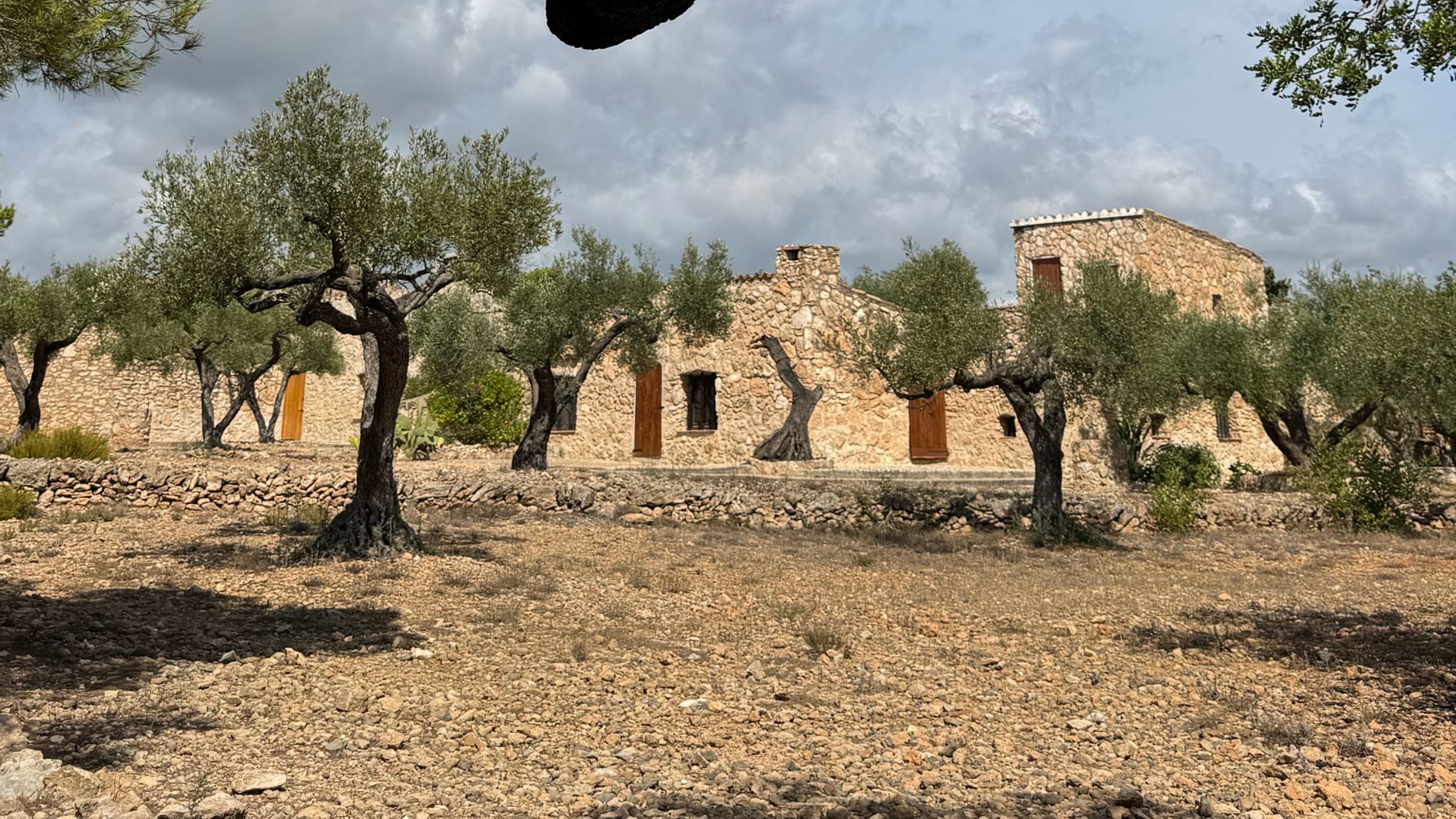
Are you looking for a house around Valencia on a tight budget, say under 300,000 euros in 2026, and you keep finding surprisingly affordable listings 30 or 40 minutes from the city? There is a strong chance those houses are built on rustic land. And that changes a great deal.
It is one of the most misunderstood topics for foreign buyers, and one of the areas where we see the most unpleasant surprises. Here, clearly, is the difference between rustic land and urban land, what it means in practice, and why these houses are so cheap.
Urban land, rustic land: the basic distinction
In Spain, every plot has an urban planning classification. Two big categories concern you:
- **Urban land (suelo urbano)**: it is buildable and part of the town. It is connected to the networks (mains water, sewers, electricity, lit and paved roads). This is the land under normal neighbourhoods and developments. It is also the land that banks finance normally.
- **Rustic land (suelo rústico, or no urbanizable, meaning not developable)**: it is meant for farming, livestock or protecting nature. You can find houses, fincas and masías on it, but their construction and evolution are tightly controlled.
Between the two, there are in between situations, and this is where many buyers get lost.
The exception that blurs everything: urbano disperso and urbano jardín
This is a subtle but important point. Less often, a plot can carry an urban label while showing all the traits of rustic land. In the Valencia region, this comes up in particular as urbano disperso (scattered urban) or urbano jardín (garden urban).
In practice, these are developments that are not fully urbanised or consolidated. On paper, part of the land may be classed as urban, but in reality:
- there is no mains sewer, but an individual septic tank (fosa séptica);
- mains electricity is not always connected (people fall back on solar, a generator or heavy paperwork);
- roads, water supply and street lighting can be incomplete;
- and often, you cannot freely extend the existing houses.
In other words, an urban label on its own does not guarantee the comfort and the rights of a truly consolidated urban plot. You have to look at the reality, not just at the word.
What rustic land really means
Buying a house on rustic land is not forbidden, and many people live very happily on it. But you have to buy with your eyes open. The points to check every time:
- Buildability and extensions: on rustic land, you cannot build or extend as you please. Many existing extensions have never been legalised and can be treated as breaches of planning rules. Make sure the house is declared and regularised.
- Utility connections: a septic tank instead of the mains sewer, water sometimes from a well or a tank, electricity sometimes missing or solar. These are real costs and lifestyle constraints to plan for.
- Legal status: the nota simple and the town hall planning certificate will tell you the true classification of the land and the legal state of the buildings. It is an essential check, in the same spirit as avoiding the classic pitfalls of buying in Spain.
The real crux: financing
Here is the point too many buyers discover too late. Banks do not finance rustic land the way they finance urban land.
On a house on rustic land, it is common for a bank to:
- lend 20 to 30 percent less than on an equivalent urban property;
- require a noticeably bigger deposit;
- or simply turn the file down.
In practice, this means a cheap house on rustic land can require far more of your own cash than a more expensive urban property. So you should confirm your financing capacity before falling in love with a finca. We walk through these mechanics in our guide on financing a property purchase in Spain.
So why are these houses so cheap?
You now have the answer. The low price is not a gift from the sky: it is the direct trade off for the constraints. Limited buildability, partial connections, no possible extensions, reduced financing, all of it weighs on the value.
That is exactly why, moving 30 or 40 minutes away from Valencia with a budget under 300,000 euros, you often land on isolated, cheap rustic houses. They can be genuine favourites, as long as you buy with your eyes open. To compare with urban residential areas, which are therefore easier to finance, see our guides on houses in Valencia city centre and its surroundings and on L’Eliana and the Camp de Túria.
Conclusion: rustic is not a dirty word, but a clear contract
A house on rustic land can be an excellent way of life: space, nature, quiet, a gentle price. The whole point is to know exactly what you are buying: the real land classification, the legality of the buildings, the utility connections and, above all, what your bank will agree to finance.
At BuenApart, a French speaking agency in Valencia, we systematically check the planning status of every property and we tell you honestly what is financeable and liveable, before you commit. Let’s talk about your project.
Frequently asked questions
What is the difference between rustic and urban land in Spain?
Urban land (suelo urbano) is buildable and connected to the town networks. Rustic land (suelo rústico, or no urbanizable) is meant for farming or nature. You can sometimes find houses on it, but with heavy limits on building, extensions and utility connections, and with much harder bank financing.
Can you extend a house on rustic land?
Usually no, or only with great difficulty. On rustic land, the right to build and to extend is tightly controlled, and many existing extensions have never been legalised. Before you buy, you need to check that the house is properly declared and regularised.
Do banks finance a house on rustic land?
Much less readily. Banks often lend 20 to 30 percent less than on urban land, ask for a bigger deposit, and some simply decline. This is something to check very early, because it decides how much you can actually finance.
Why are houses on rustic land cheaper?
Because of these constraints: limited buildability, connections that are sometimes missing (septic tank, not always mains electricity), no room to extend and reduced financing. The lower price is the direct trade off for these limits.