
Selling a property in Valencia in 2026 is no longer about posting a listing on a portal and waiting for the phone to ring. Buyers discover homes on Instagram and TikTok, compare them from Amsterdam or Madrid and decide within seconds whether they want a viewing. To sell quickly and at the right price, you need a strategy: where to show the property first, how many photos to publish, how to handle the viewing and, above all, how to reassure the buyer all the way to signing the arras contract. This is the method we use with our sellers.
In short, to showcase your property and sell it in Valencia:
- Launch the property on social media first, before the portals: the “off-market” effect creates impact.
- Use a professional photographer, and a drone for a house.
- Or, depending on the property, play on exclusivity with just a few photos: a strategy to agree with the seller.
- Get the first two photos of the listing right: they are what generate viewings.
- Prepare the first 30 seconds of the viewing.
- Have a complete, up-to-date file ready before the first viewing.
- Support the buyer, local or from abroad, all the way to the arras contract: that is where the sale is won.
1. It all starts on social media: the “off-market” effect
At our agency, a property does not go on Idealista first. It is first presented on social media and to our community of active buyers, before it is published on the portals. This is the off-market effect: the property is shown to a select circle before everyone can see it.
This launch has three advantages:
- Impact. A property presented as a preview gets far more attention than one more listing among hundreds.
- A sense of exclusivity. Buyers feel they are seeing something others have not seen yet, and they decide faster.
- Discretion. Some sellers do not want their neighbours or friends to discover the sale on a portal. A targeted launch makes that possible.
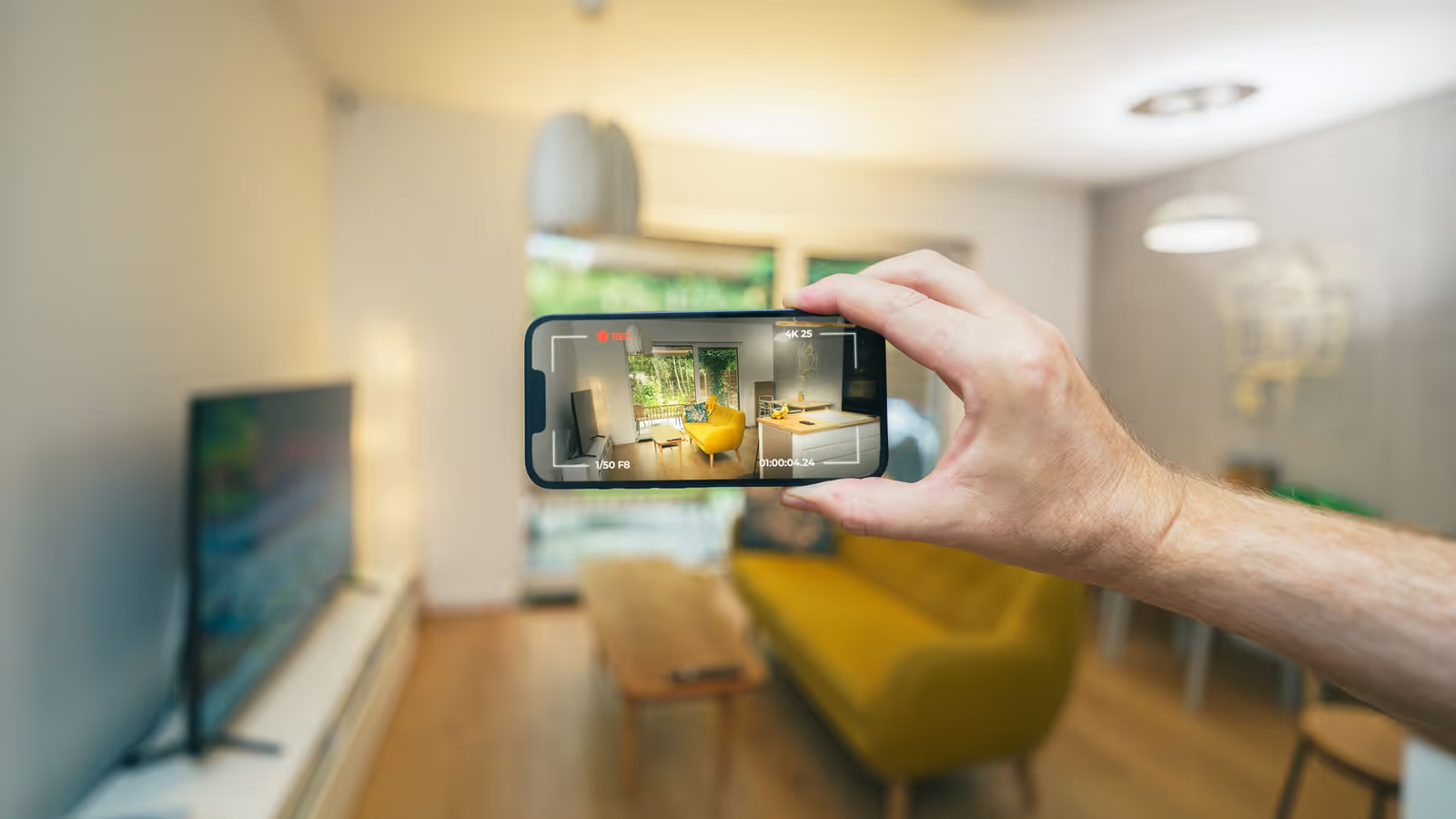
You need to be on every platform, but two are performing especially well in 2026: Instagram and TikTok. The format that works is short vertical video that walks through the property in under a minute, ideally presented by a person rather than a slideshow. Buyers see the space, the light, the view and the street, and they hear from someone who knows the property.
Social media comes first, but it does not replace everything. The portals are still where most Spanish buyers look for a home. The right strategy combines both: social media to create impact, then the portals to reach the whole market.
2. A professional photographer, and a drone for houses
Photos taken on a phone on a rainy day lose buyers before the first call. A professional photographer knows when the light comes in, how to frame the real size of each room and how to highlight what gives the property its value: the terrace, the ceiling height, the view, the natural light.
For a house, a drone changes everything. One aerial image shows what ten ground-level photos cannot: the size of the plot, the pool, the surroundings, the distance to the sea or the hills, the orientation. That image is often what convinces a buyer to make the trip.
One rule to keep in mind: the buyer should be pleasantly surprised, never misled. A wide-angle lens that doubles the size of a room or heavy retouching generates calls, then disappointment at the viewing. For preparing the property itself (decluttering, styling, light), read our article on home staging in Valencia.
3. Or the opposite: few photos, to play on exclusivity
Another trend takes the opposite approach: publishing very few photos. A handful of well-chosen images, a mood, and the rest to be discovered on site. The property keeps an element of mystery, and the buyer who asks for a viewing arrives genuinely curious.
This approach suits character properties, high-end homes and sellers who value discretion. It has a trade-off: fewer photos can mean fewer enquiries. That is why the level of exposure is decided with the seller, based on the property, its price and the time frame. There is no single recipe, only a strategy for each property.
4. Generating viewings: the first two photos do the work
On a portal just as on Instagram, buyers decide in seconds. It is the first two photos that make them click or scroll on. They should show the property’s strongest features: the brightest living space, the terrace, the view, the front of a house or the drone shot.
The rest of the listing should follow through:
- A logical photo order that walks through the property as if you were stepping inside.
- A floor plan, which remote buyers almost always look at.
- Clear text, in at least English and Spanish, to reach buyers from abroad as well as locals.
- The energy rating: Spanish law requires the energy label to appear in every offer, promotion and advertisement for the sale or rental of a property (Royal Decree 390/2021, article 15).
5. The viewing: the first 30 seconds
Photos bring the buyer through the door, but the decision takes shape in the first 30 seconds of the viewing. The entrance, the light, the smell, the temperature: it all counts before a word is said.
In practice: shutters up and lights on before the buyer arrives, the home aired, the entrance clear, and a route through the property planned to finish on its best feature. It is usually better for the owner not to be there: buyers feel freer to look around, ask questions and picture themselves living there.
6. Reassuring the buyer: a complete, up-to-date file
An interested buyer quickly has questions: is the property free of charges? Are the community fees paid? What is the real floor area? If the answers take too long, they hesitate, and another property can move ahead. The file should be ready and up to date before the first viewing:
- The title deed (escritura).
- A recent nota simple from the Land Registry, confirming the owner and whether there is any mortgage or charge.
- The latest IBI (property tax) receipt.
- The energy performance certificate.
- The community of owners’ certificate confirming fees are up to date.
- If there is a mortgage, the bank’s statement of the outstanding balance.
A property free of charges, with its paperwork in order, reassures both the buyer and their bank. We explain each document in our guide I want to sell my apartment in Valencia.
7. Supporting buyers from abroad, and buyers from here
Valencia is attracting more and more buyers who do not live in Spain. According to the Spanish Land Registrars’ property statistics, in the second quarter of 2026 16% of homes bought in Spain were bought by foreign nationals, a record high. The two leading regions are the Balearic Islands (32.3%) and the Valencian Community (31%), driven by the province of Alicante (46.4%). In the province of Valencia, the share reaches 16.3%, roughly one buyer in six, up more than 3 points in a single quarter. The leading nationalities are British, Dutch and German.
Supporting these buyers is a skill in its own right: you have to attract them, avoid putting them off with the paperwork and reassure them. They are not familiar with the NIE, the arras contract or the role of the Spanish notary. Many buy without being able to visit several times: according to our figures, one buyer in two has never visited before signing. For them, video and remote viewings replace the trip.
Spanish buyers, for their part, mostly need advice on financing. When should they commit? Do they need the bank’s approval in principle before signing the arras? Banks lend on the tasación (the bank valuation), not on the price: if the valuation comes in below the price, the deposit required goes up. A buyer who finds this out after signing can lose their deposit. For a seller, a buyer whose financing has been checked is worth more than a higher but shaky offer.
8. All the way to the arras: where the sale is really decided
Generating viewings is not selling. The real goal is to bring the buyer to a reservation, then to the arras contract, the Spanish preliminary sale agreement. That is when both parties are truly committed: with penitential arras, the most common type, a buyer who pulls out loses their deposit, usually around 10% of the price, and a seller who pulls out pays it back twice over.
In Spain, the sale is decided at the arras stage far more than at the notary. In our experience, a sale that reaches the arras with clean paperwork and verified financing almost always goes through to completion. All the work beforehand (photos, social media, viewings, documents, guidance) is there to reach that moment in the best possible conditions.
What BuenApart does for your property
For each property, we define the strategy with you: social media launch, level of exposure, number of photos. We organise the professional photo shoot, the drone for houses and the video, write the listing in several languages, prepare the file and support buyers, local or international, through to the arras and then to the notary. And if you do not live in Valencia, we handle the entire sale remotely, in English, Spanish and French.
Frequently asked questions
Can you sell a property through Instagram or TikTok?
Yes, social media is now one of the best ways to get a property noticed, especially with short video. It creates impact and reaches buyers abroad. But it is not enough on its own: the portals remain the main place Spanish buyers search. The best approach is to launch the property on social media, then publish it on the portals.
What is an off-market sale?
It is a sale where the property is first presented to a small circle (social media, the agency’s buyer database) before, or instead of, being published on the portals. It creates a sense of exclusivity and protects the seller’s discretion.
How many photos should a property listing have?
It depends on the strategy. A full listing shows every room, with a floor plan and, for a house, a drone shot. An exclusivity strategy, on the other hand, publishes few photos and leaves the discovery to the viewing. Either way, the first two photos matter most.
What documents should be ready before viewings?
The title deed, a recent nota simple, the latest IBI receipt, the energy certificate, the community of owners’ certificate confirming fees are paid and, if there is a mortgage, the bank’s outstanding balance statement. A ready file reassures the buyer and their bank.
How many foreign buyers purchase property in the Valencia region?
In the second quarter of 2026, 31% of home purchases in the Valencian Community were made by foreign nationals, just behind the Balearic Islands (32.3%). In the province of Valencia, the share is 16.3%, roughly one buyer in six, according to the Land Registrars.
Want to sell your property in Valencia? We build the showcasing strategy with you and support buyers through to signing, on site or remotely. Request a free valuation.
Sources: Colegio de Registradores, Estadística Registral Inmobiliaria, Q2 2026; Royal Decree 390/2021, article 15. Information correct as of 3 November 2026.